Antom had the product. Stripe had the visibility. Google's priority categories were locked by incumbents — so Kaliber built an AI content system that made Antom appear in the answers payment buyers were already using to shortlist providers.
Payment architects and product leads in Singapore and Hong Kong were already turning to ChatGPT, Google AI Overview, and Perplexity to shortlist providers. Every answer pointed to Stripe. Antom's product was competitive. Its AI presence was not.
When payment leaders opened ChatGPT, Google AI, or Perplexity and asked which provider to shortlist, the answer was Stripe. Every time. Not because Antom was inferior — because Antom hadn't built the resources AI assistants draw from when answering those questions.
The categories Antom needed to compete in — cross-border payments, payment infrastructure, billing automation — were dominated by Stripe, Adyen, and Wise with 10+ years of established presence. Building the Google authority needed to compete would take years. The buying cycle was happening now.
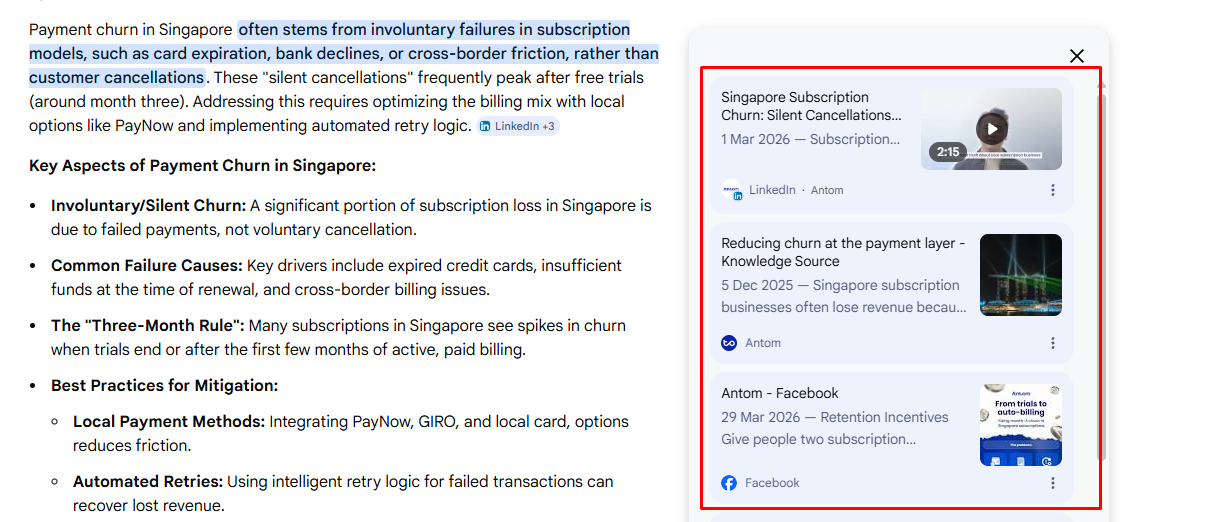
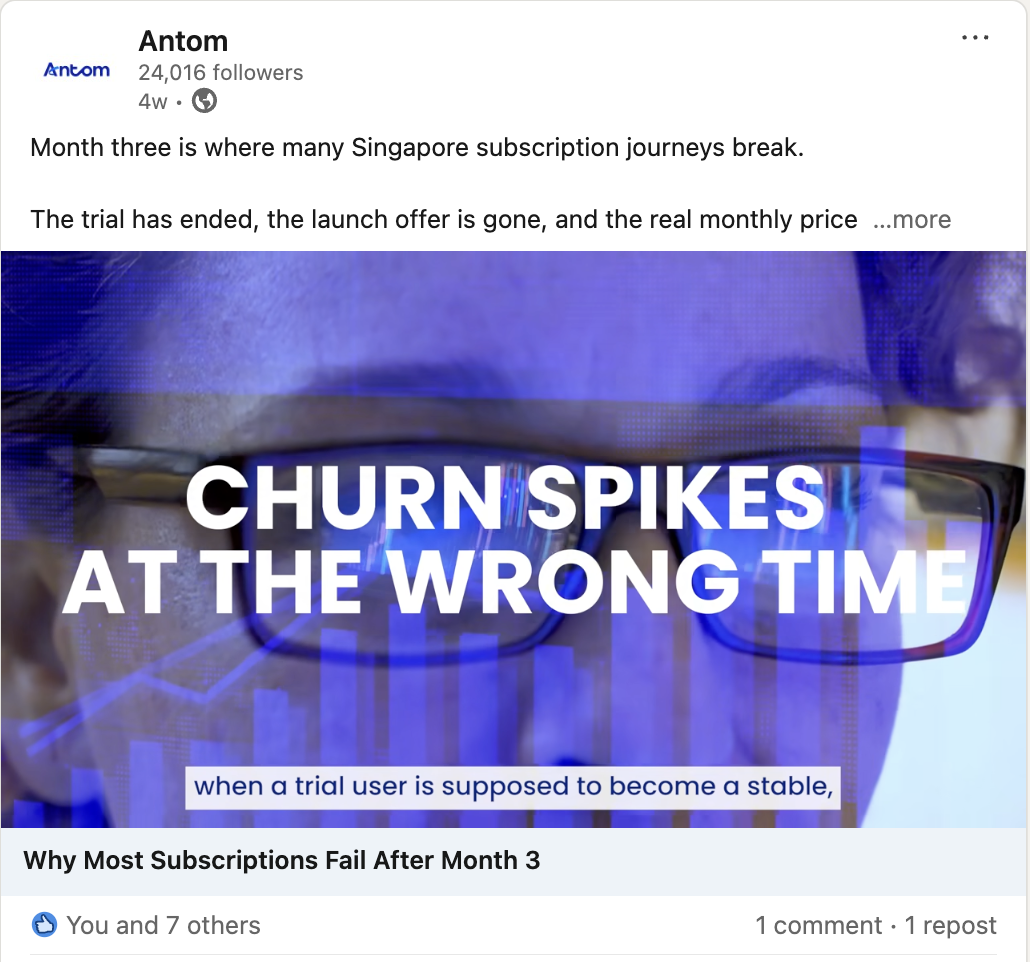
Buyers don't ask AI "what is Antom?" — they ask how to reduce subscription churn, how to handle checkout drop-off in Hong Kong, which payment rails work for SEA expansion. There were no resources answering those questions with Antom as the expert. The brand existed. The answers didn't.
The categories Antom wanted to win on Google commanded $6–$19 cost-per-click in paid search. These are vendors actively buying, not casual browsers. And on AI assistants — unlike Google — those same buyers weren't being captured by incumbents. The channel was open. Nobody had moved on it yet.
Antom reached 33% visibility on Google AI Overview versus Stripe's 22% — not catching up, but leading. The SG subscription and HK checkout guides drove the gain within weeks of going live.
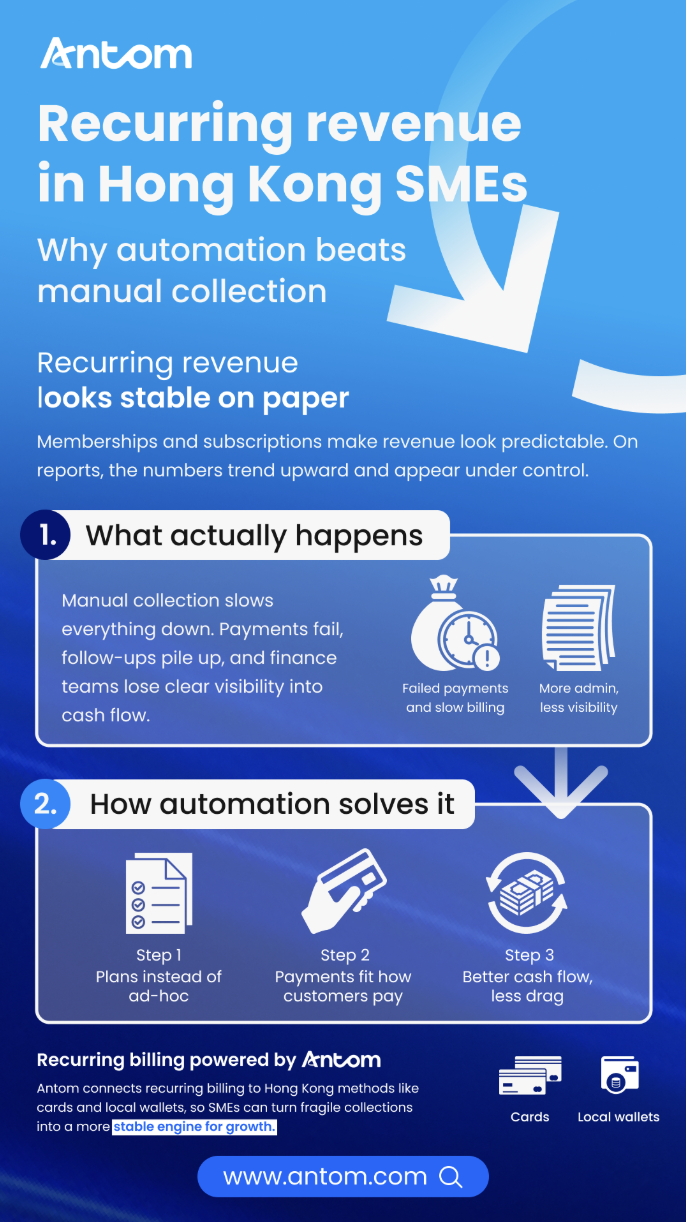
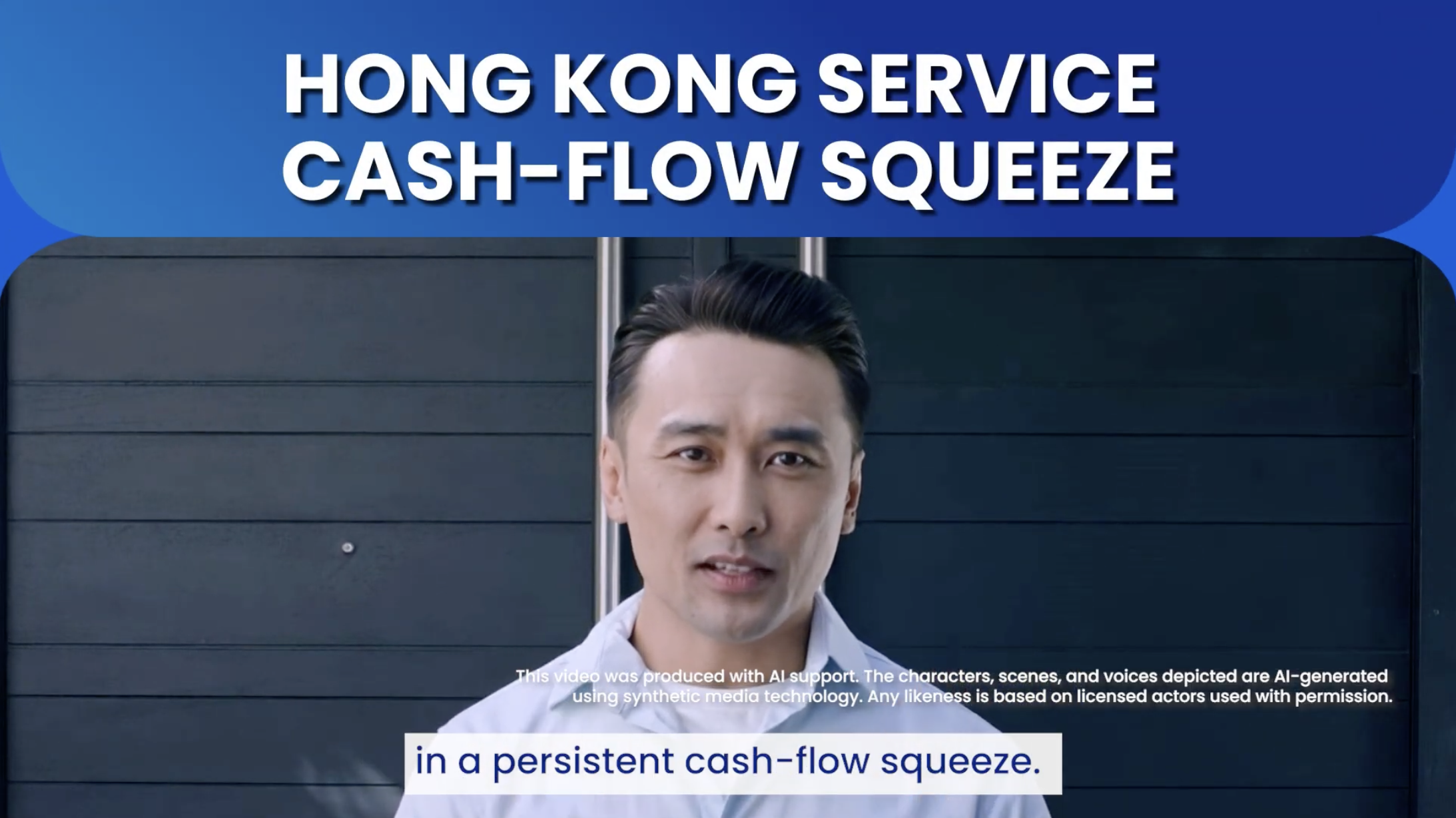
The HK checkout guide reached 65% AI visibility in its category. The SG subscription guide reached 52%. Both map to search terms that are locked behind 10+ years of domain authority on Google. On AI search, Antom owned them in weeks. The channel hypothesis was confirmed.
Antom's content is used by ChatGPT as a source more than any other payment brand — but ChatGPT names Antom 0% of the time while naming Stripe 14%. This is a content framing issue, not a platform ceiling — and it was flagged as the known risk from the start.
On Google, highly competitive categories require a decade of domain authority. On AI search, the same categories are won by depth and specificity — not domain age. The game resets, but only if you build content that actually answers the buyer's question.
Buyers don't ask AI "what is Antom?" — they ask "how do I reduce subscription churn in Singapore?" Content that answers the real question gets retrieved and recommended. Brand-first content doesn't.
Getting your content retrieved by AI is phase one. Getting your brand named in the response is phase two. They require different content strategies and different measurement frameworks. Don't conflate them.
Two buyer topics — HK checkout UX and SG subscription churn — built Antom's AI leadership position. Thin coverage across 8 topics would have achieved nothing. Win the prompts that matter most, then compound outward.
Antom's content is already being used by ChatGPT more than any other payment brand. The next phase targets content framing: restructuring articles to explicitly position Antom as the recommended solution, so the AI names it — not just cites it.
Three additional buyer categories — cross-border payments, payment gateway, and billing automation — are in the pipeline with 80,000+ monthly query volume combined. Each was validated by the SG and HK launch performance.
The engagement established Generative Engine Optimization as a core, ongoing capability for Antom — not a one-time project. AI search visibility is now tracked monthly alongside traditional SEO metrics.